Identifying Hereditary Spastic Paraplegias with White Matter Involvement
HSPs present clinically with spastic paraparesis; to narrow down the differential diagnoses, the prompt and accurate recognition of key radiological features becomes critical.
Hereditary spastic paraplegia (HSP) is a group of rare and progressive genetically inherited disorders that cause weakness and stiffness of the legs (spasticity). There are more than 80 genetic types of HSP currently identified. Early symptoms include difficulty walking and leg muscle stiffness. As this disease is progressive, over time these symptoms may worsen, and patients may require a mobility aid such as a cane, walker or wheelchair. Patients with HSP may experience a range of symptoms varying from minimal to severe.
Different forms of HSPs are denoted with the prefix SPG (from spastic paraplegia), followed by a number (e.g. SPG1) based on the order in which they were discovered.
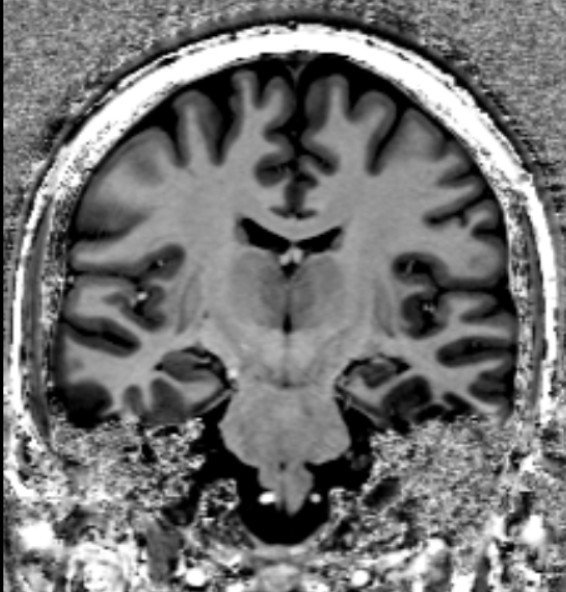
White matter abnormalities are frequently documented on MRI in many neurogenetic disorders, and they often represent imaging criteria that are crucial to orient the diagnosis process. HSPs are among the neurogenetic conditions in which white matter involvement is most frequently observed. However, in most forms, white matter abnormalities have not been investigated further and their role as potential imaging biomarkers has not been explored.
For more information about HSPs, please visit:
What is Hereditary Spastic Paraplegia?
What is our tool?
By definition, all HSP patients present clinically with spastic paraparesis (stiffness of the legs); to narrow down the differential diagnoses among HSPs and HSP mimickers (e.g. multiple sclerosis), the prompt and correct recognition of key radiological features becomes critical.
Among imaging findings associated with HSP, the involvement of white matter structures and tracts are particularly relevant and can guide the diagnostic process.
This tool is an imaging-based algorithm of common MRI features of white matter associated with HSPs. This tool is to be used by radiologists, clinicians, trainees, and patients and caregivers to narrow down differential diagnosis, find and review scientific articles, and find educative material on HSPs with white matter abnormalities.